
Tint shops love the word "ceramic" the way coffee shops love the word "artisanal," so it's fair to wonder if you're paying for a material or a mood. I've spent 30+ years in vehicle electronics and we install both ceramic and carbon film at our Kearny Mesa shop, so here's the honest breakdown, including when the cheaper film is the smarter buy.
What's the difference between ceramic and regular tint?
Regular tint is usually dyed film: it darkens the glass by soaking up light. Ceramic tint uses non-metal ceramic particles that block infrared heat, the part of sunlight you feel on your arm. So two films can look identical from the curb while one keeps the cabin noticeably cooler.
| Film | Heat rejection | Color over time | Phone and GPS | Price |
|---|---|---|---|---|
| Dyed (regular) | Lowest | Can fade over the years | No interference | Cheapest |
| Carbon | Middle | Holds its color | No interference | Mid-range |
| Metalized | Good | Holds its color | Can block phone, GPS and radio | Mid-range |
| Ceramic | Highest | Holds its color | No interference | Highest |
The darkness is a separate choice. A 35% ceramic and a 35% dyed film let the same amount of visible light through. The difference is what happens to the heat, which is exactly why "but they look the same" is the most expensive sentence in the tint bay.
Ceramic tint vs carbon tint
Carbon is the middle option: it rejects more heat than dyed film and doesn't fade, but ceramic rejects more heat again. Both are metal-free, so neither one messes with your phone signal, and both have that clean, matte look instead of the purple tinge old dyed film gets.
Jalopnik's breakdown lands in the same place most installers do: carbon is a solid value, ceramic is the better performer on heat. Carbon is the sensible sedan of window film. Ceramic is the same sedan with the ventilated seats you didn't know you needed until July.
Ceramic tint vs regular tint at night
At night, the darkness percentage matters far more than the film type. A 20% film is hard to see out of after dark whether it's ceramic or dyed. What ceramic adds is clarity: quality ceramic film is made to stay optically clear, so you're not peering through haze on top of the darkness.
If night driving worries you, pick a lighter shade in ceramic rather than a dark shade in anything. You keep most of the heat benefit and none of the squinting at the reverse lights like they owe you money.
One California note: the front side windows can only take clear film, so the night question really only applies to the back. Our California window tint law guide covers what's legal on each window.
Ceramic tint pros and cons
Ceramic's big win is heat without signal problems. Its big drawback is price. 3M says its Ceramic IR film rejects up to 95% of infrared heat, blocks up to 99% of UV, and is metal-free so it won't interfere with phones, GPS or satellite radio.
| Ceramic tint | What it means for you |
|---|---|
| Pros | Best heat rejection of the common films, no signal problems, clear view out, holds its color |
| Cons | Costs the most, and on the front side windows in California it has to be the clear version anyway |
Those are the manufacturer's best-case numbers for its own film, not a promise for every ceramic product out there. Ask which brand and which line you're getting, the same way you'd ask what's actually in the "house special."
Ceramic tint vs regular tint cost
Ceramic usually costs the most, dyed the least, and carbon lands in between. Published 2026 shop price guides put a full car at roughly $100 to $300 for dyed film, $200 to $500 for carbon and about $350 to $800 for ceramic, according to UPPF and CDC Auto Detailing.
Those are other shops' published ranges, not our prices. We quote every job from your year, make and model, because a two-door coupe and a three-row SUV are not the same afternoon. Our full guide to window tint prices breaks down what moves the number.
What we see at the shop
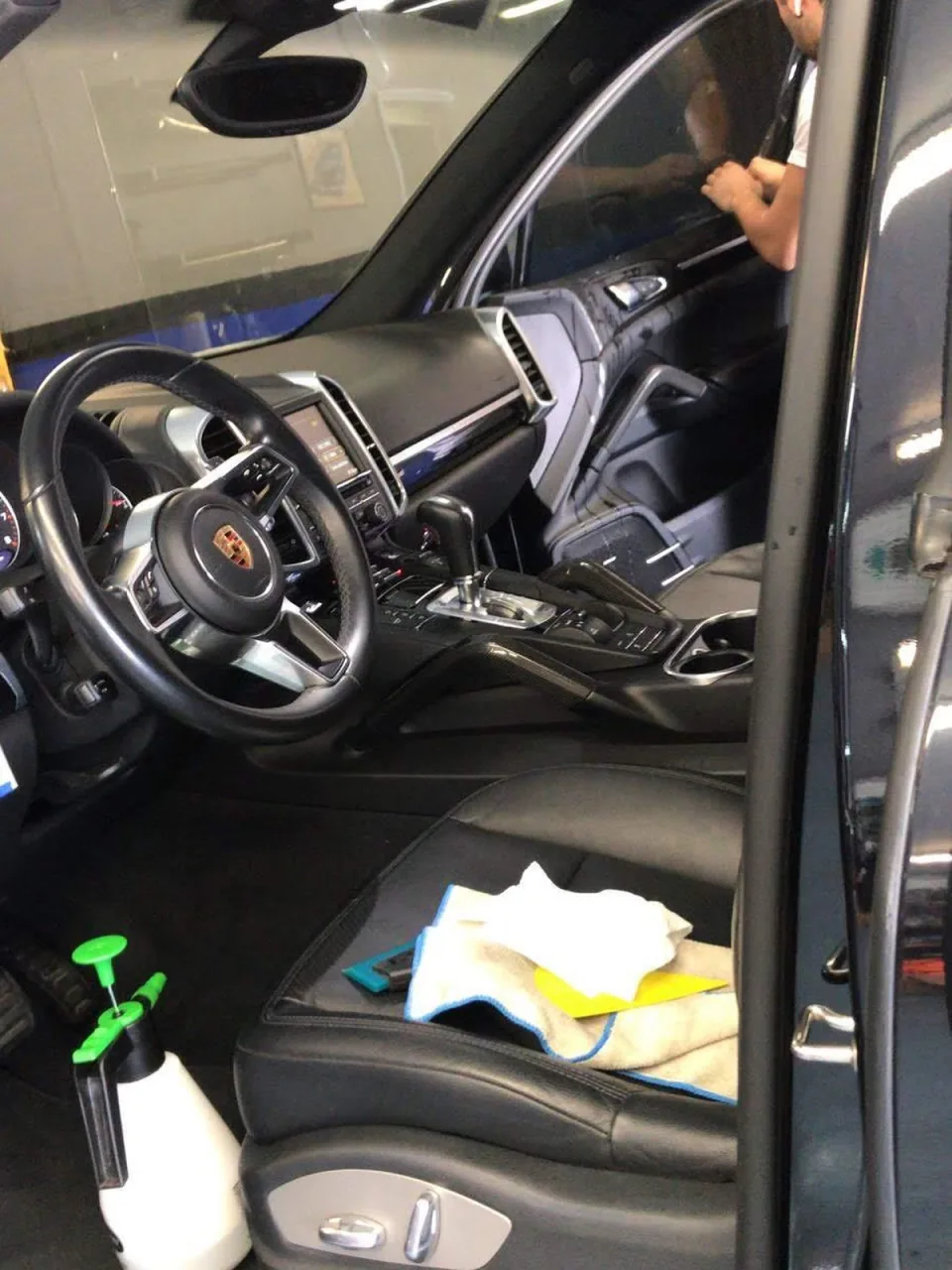
Most people who ask about ceramic are really asking about heat, and that's the question we answer first. At our shop on Kearny Mesa Rd, we ask where the car lives, how much sun it sits in, and which windows you want darker before we suggest a film.
If the car is garaged and you want the look, we'll tell you carbon does the job. If it bakes in an open lot all day, ceramic earns its price. One customer, Dillon T., summed up his truck after tint and a wrap: "it looks amazing." That's the goal, with the heat handled too.
See the films we install on our ceramic window tint page, or compare every option on our San Diego window tint page.
Ceramic tint vs regular tint: frequently asked questions
Is ceramic tint really better than regular tint?
For heat, yes. Ceramic film rejects much more infrared heat than dyed film at the same darkness, and it doesn't fade. If you only want the darker look and don't care about heat, regular dyed tint does that job for less money.
Is ceramic tint darker than regular tint?
Not by itself. Darkness is set by the shade you pick, like 35% or 20%, and both films come in the same shades. Ceramic blocks more heat at any given darkness, so you don't have to go darker to stay cooler.
Does ceramic tint affect phone or GPS signal?
No. Ceramic film is metal-free, and 3M says its ceramic film won't interfere with phones, GPS or satellite radio. Metalized films are the ones known to block signals.
How long does ceramic tint last?
Ceramic and carbon films don't fade the way dyed film can, and major brands back their ceramic films with long warranties. Ask any installer which brand and warranty you're getting before you book.
Is ceramic tint worth it in San Diego?
If your car sits in the sun at work or you drive inland in summer, usually yes, because heat is the main thing ceramic fixes. If the car lives in a garage and you want the look, carbon or dyed film is the cheaper way to get it.
Get ceramic or carbon tint in Kearny Mesa
Not sure which film fits your car? Call or text (619) 852-0086 with your year, make and model, or walk in at 5640 Kearny Mesa Rd, Unit B. See every option on our ceramic window tint page.